Turning an RSS Reader Into an Intelligence Pipeline

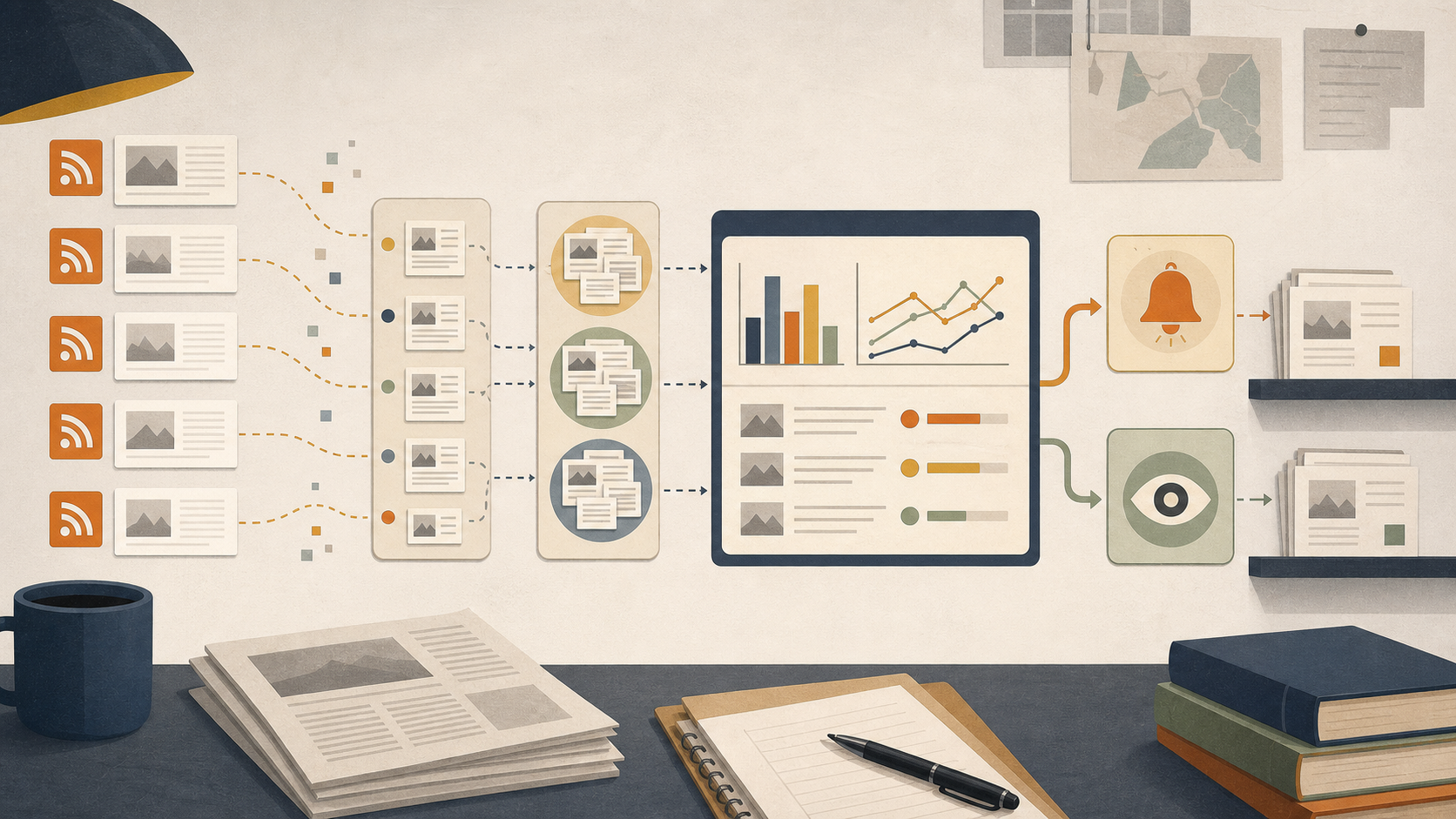
Introduction I consume far more feeds than I can reasonably examine with sustained attention, which means that the substantive difficulty lies not in volume alone but in the profoundly uneven distribution of relevance within that volume. On an active day, a hundred articles may arrive in rapid succession; perhaps four contain a development warranting action, while the remaining ninety-six obscure those few consequential pieces beneath a familiar and relentless accumulation of headlines, summaries, reposts, and derivative commentary. ...

August 16, 2026 · 10 min · Robert D. White

One Ollama Endpoint, Two Very Different Backends

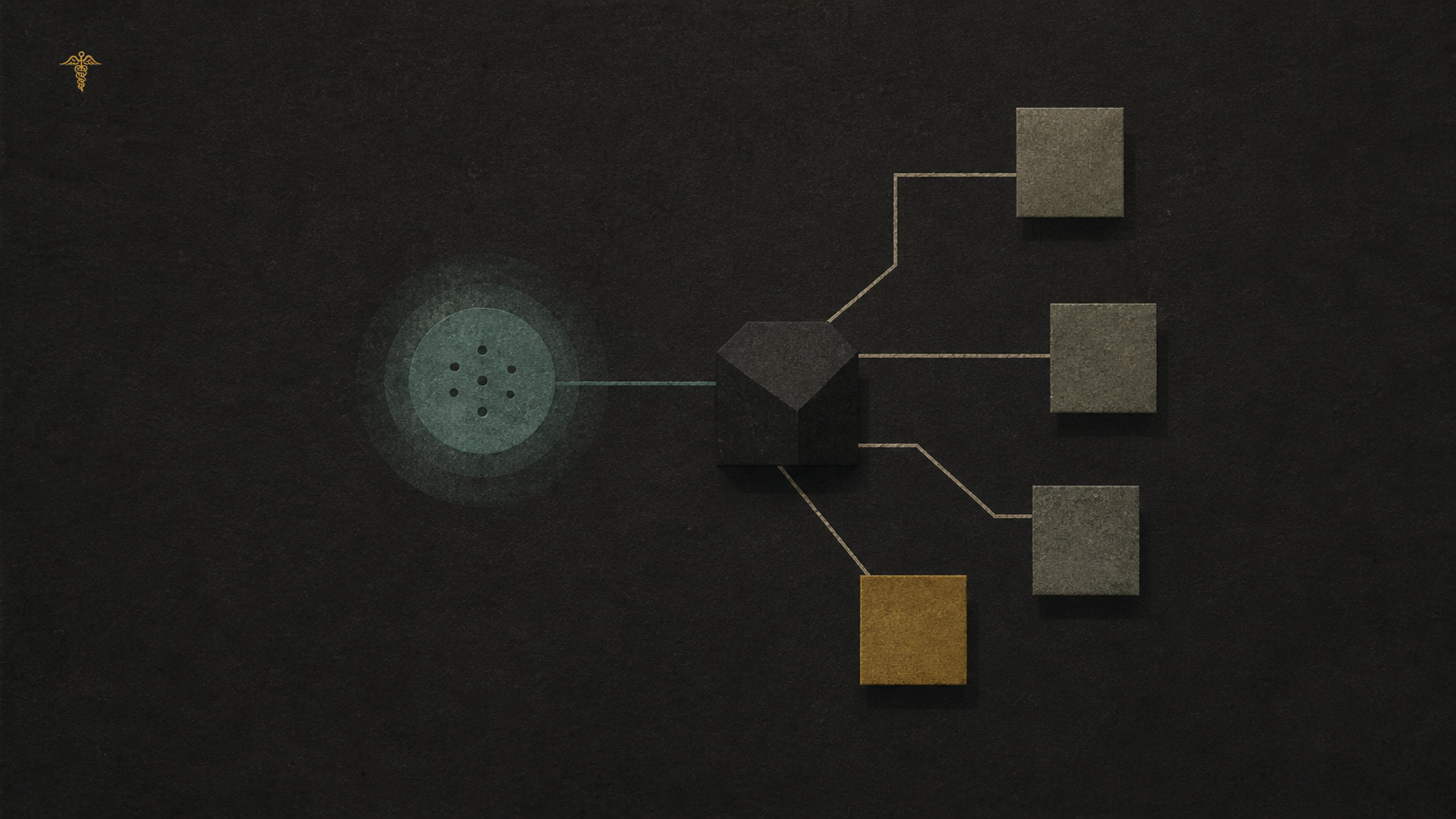
Introduction Nine namespaces in my cluster depend upon a local language model. The SDR research stack tags transcriptions, the politics dashboard summarizes feeds, the congressional-trade tracker prepares daily summaries, and several agents submit work to the service continuously. Despite their differing purposes and operational rhythms, each consumer was designed to address one stable hostname on port 11434. That hostname fronts two active Ollama deployments: an RTX 5090 in a desktop tower that is intentionally powered down at intervals, and an NVIDIA GB10 Spark board whose unified-memory architecture causes GPU-backed allocations to count against the pod’s memory limit. The repository contains a CPU-only deployment manifest, but the active Kustomization excludes it under ordinary circumstances. The Spark deployment is therefore the operational fallback. ...

August 14, 2026 · 7 min · Robert D. White
The congress-trades dashboard showing trade-count and volume KPIs, a weekly buy/sell chart, and a hot-tickers list

Parsing Every Congressional Stock Disclosure: Seventeen CronJobs and a Lot of Bad PDFs

Introduction Members of the United States Congress must disclose many securities transactions, and the resulting records are public. As a dataset, however, they are close to unusable: the House publishes a ZIP archive whose underlying filings are frequently scanned images; the Senate uses a separate system with its own irregularities; tickers are inconsistent or absent; and neither chamber provides an interface resembling a durable public API. Several commercial services solve this and sell the result. I wanted to see how much of it I could do myself, in-cluster, from the primary sources. ...

August 9, 2026 · 7 min · Robert D. White
A dark title card for pages, listing its four MCP tools

Agentic Static-Site Hosting: Giving Claude a Place to Publish on Kubernetes

Introduction I use Claude Code for substantial one-off analysis, and its output is frequently a single self-contained HTML file. Examples include a flight-log dashboard, an interactive trainer derived from an audiobook transcript (described in Building Interactive Trainers From My Audiobook Library), a pedigree chart, and a client map. Each began either as a Live Artifact or as a file in /tmp that I opened with file://, inspected once, and subsequently lost. ...

August 8, 2026 · 18 min · Robert D. White
A dark card grid linking seven audiobook trainers

Building Interactive Trainers From My Audiobook Library

Building Interactive Trainers From My Audiobook Library I listen to a considerable number of business and leadership audiobooks, yet retain very little of their content a month later. Listening is passive; useful frameworks blur together with time; and “I read that one” readily becomes “I think I read that one.” I wanted the retention without replaying seven hours merely to recover the one idea I needed. I therefore built a compact production process that converts an audiobook into an interactive trainer, in which each concept and example becomes a card supporting three modes: Browse, Flashcards, and Quiz. Each book receives its own self-hosted site on my internal network; during a single afternoon, I applied the process to seven titles. ...

July 11, 2026 · 6 min · Robert D. White
Available as a Tor onion service